If you are comparing hotels in Surabaya for a family stay, you are probably not just choosing a place to sleep. You are trying to protect everyone’s mood, energy, and patience before arrival. Family travel should feel exciting, not like a long series of small avoidable problems.
Yet many parents find out too late that “family-friendly” can mean very little in practice. A room may look fine in photos but feel cramped once bags, snacks, strollers, and tired children all arrive at once. Across more than two decades of hospitality work in Indonesia, we have seen one truth repeat itself: the right hotel removes friction before your family even notices it.
That is why the most useful way to compare Surabaya hotels is not by star rating alone. It is by asking whether the property will still make the day easier at 7 a.m., at breakfast, after a late nap, and again at 8 p.m. when everyone is deciding whether the evening still feels manageable.
What You'll Find:
- The best family stay in Surabaya is not defined by star rating alone, but by how well the hotel reduces daily friction.
- Room layout, location logic, wellness facilities, and food flexibility matter more than many families expect.
- Before booking, ask one practical question: will this hotel make our day easier at 7 a.m. and 8 p.m., not just look good online?
- When you choose well, the stay feels lighter, calmer, and more usable for both parents and children.
- No hotel can eliminate every travel stress, but the right one can prevent many of the problems that drain family energy.
Understanding What Families Actually Need From Hotels in Surabaya
Most families do not struggle because they picked the wrong city. They struggle because they picked a hotel that looked acceptable online but did not match how real family travel works on the ground.
That difference matters in Surabaya city, where movement across the city, meal timing, and rest windows can shape the entire stay. For families, the best hotels in Surabaya are the ones that support the rhythm of the day, not just the booking decision.
For parents choosing comfort over compromise
Parents often start with nightly rate because it feels measurable. But once children are involved, room functionality usually matters more than the number on the booking page.
Across our properties, a consistent pattern appears: roughly two-thirds of family complaints trace back to room-functionality mismatch rather than price alone. A room that looks efficient for two adults can become frustrating fast if there is no clear luggage zone, no easy way to move around sleeping children, or no space for everyone to reset after a long drive or flight.
What families usually need is simple:
- enough floor space to move without constant interruption
- a layout that separates sleep, storage, and circulation
- a bathroom setup that does not create a queue every morning
- furniture that supports real use, not just visual appeal
A lower rate stops feeling useful if the room turns every bedtime into a negotiation. That is also why the lowest price or a headline from a cheap hotel search rarely tells the full story for families.
Booking platforms skip practical usability
Listing photos are built to attract attention, not answer the questions parents actually have. They rarely show what happens once a stroller is parked, suitcases are open, wet clothes are drying, and one child is asleep while another is still awake.
The blind spots are predictable. Photos do not reveal whether sound carries from the corridor, whether the bathroom is easy to manage with children, or whether the room layout forces everyone into each other’s space. In family travel, those details are not minor. They shape how rested everyone feels the next day.
According to Hotel Dive (2025), hospitality trends are increasingly centered on experience quality and operational delivery, not amenities viewed in isolation. For families comparing Surabaya hotels, that translates into a practical lesson: a room should be judged by usability, not photography.
The question to ask is not “Does this room look nice?” It is “Will this room still work after ten hours of family movement?” That is the point where the best hotels in Surabaya start to separate themselves from average options.
For multi-generational stays
Multi-generational family travel is common across Indonesian domestic stays, and it changes hotel needs immediately. Grandparents may value easier bathroom access, shorter walking distances, and quieter circulation, while parents are still managing meal timing, child routines, and luggage.
Accessibility is not only for elderly guests or guests with a mobility need. It affects everyone’s comfort. Wider movement paths, simpler elevator access, seating in the right places, and a room layout that does not force repeated bending, lifting, or crowding all help a family function better.
Across business travelers, government delegations, and families staying at Harris properties throughout Indonesia, we repeatedly see the same thing: when movement inside the property feels effortless, guests conserve more emotional energy for the actual purpose of the stay. That is the first filter we would use when reviewing hotels in Surabaya with grandparents, children, or both.
Why Hotel Location Shapes Your Entire Family Experience
A hotel can have good rooms and still create a tiring stay if every outing becomes a logistics problem. That is why location deserves more weight than many families give it during the first search.
The best family hotel is rarely the one closest to a single attraction. It is the one that reduces friction across the whole day: food runs, traffic, weather, naps, quick errands, and the moments nobody plans for.
The hidden cost of poor location choices
Poor location creates costs that never appear in the room rate. You feel them in longer drive times, meal delays, overtired children, and the constant need to reorganize the day around traffic.
In major Indonesian cities, families can easily lose 1.5 to 2 hours per day to poor route planning and unnecessary backtracking. In Surabaya, that lost time often shows up in the late afternoon, when energy is already dropping and parents are deciding whether one more outing is worth the effort.
A hotel that seems “close enough” on a map may still work badly if access roads are inconsistent, if daily essentials require a separate trip, or if the property sits far from the family’s actual movement pattern. Convenience is not about distance alone. It is about how many decisions the location quietly removes.
This becomes especially clear when families are visiting Surabaya for only a short stay. If your plans include the airport, a train station, shopping, and time back at the hotel between outings, one poor base can make the whole schedule feel heavier than it should.
For families with young children
With young children, mall-connected hotels solve more problems than families expect. This is not about shopping as an activity. It is about having fast access to practical support without reorganizing the day.
Direct access helps in very ordinary moments:
- emergency supplies when something runs out
- flexible dining when one child wants something simple and another refuses the original plan
- weather-proof movement during heavy rain or hot afternoons
- a low-effort backup option when the family is too tired for another drive
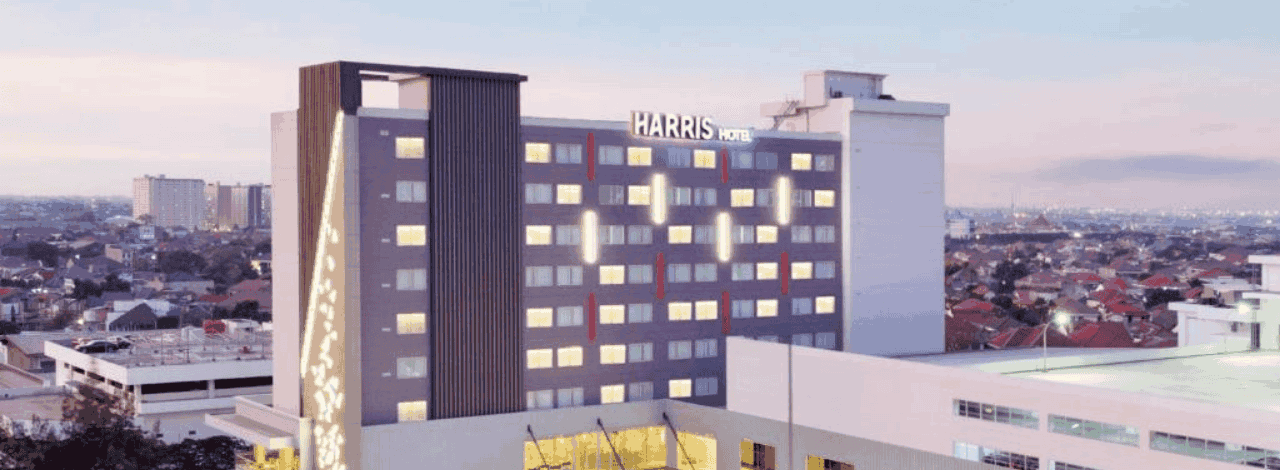
On school-holiday weekends, we often see the shift clearly at our HARRIS Hotel & Conventions Bundaran Satelit Surabaya: a family that might otherwise need a separate car trip for one missing item or one easier meal can solve it in minutes, then return without losing the evening.
That kind of convenience protects mood as much as time. It also widens restaurant choice, gives families faster access to breakfast alternatives, and helps the stay remain enjoyable even when plans change halfway through the day.
Why west Surabaya is ideal for stress-free family movement
West Surabaya works well for family stays because it supports smoother movement, especially for families balancing city plans with downtime. The area gives a more practical base for retail access, dining options, and road connectivity than many first-time visitors expect.
For family stays, traffic logic matters as much as attraction planning. If each part of the day requires a long cross-city transfer, everyone pays for it by dinner time. A west Surabaya base can reduce that stop-start feeling. Instead of treating the hotel as a place to return to only at night, families can use it as a working part of the day: rest, eat, regroup, head out again.
Many first-time visitors assume that a Surabaya city center or city center search will automatically deliver the easiest base. In practice, it depends on your route. Families moving between west-side neighborhoods, mall stops, and residential visits may find that west Surabaya is more convenient than staying closer to Tunjungan Plaza in the Surabaya city center.
The same logic applies if your plans stretch across the city. A family heading from a morning errand to Ciputra World Surabaya, then back for a nap, then out again for dinner needs a hotel with useful positioning, not just a familiar map pin. If your schedule includes Pakuwon Mall, a quick run toward the airport, or a pickup at Gubeng Train Station, area choice has a direct effect on how calm the day feels.
How Family Friendly Hotels Should Actually Function
“Family-friendly” is one of the most overused labels in hospitality. Parents often discover too late that the hotel had child-themed marketing but very little real operational support.
A truly family-friendly hotel functions well even in the less photogenic parts of the stay: check-in with tired children, activity gaps between meals, supervision needs, and the parent need for short, meaningful downtime.
Kids clubs versus true engagement spaces
Not every kids club improves a stay. Some are simply rooms with toys. What matters is whether the space gives children structured engagement and gives parents confidence that the time is being used well.
Real programming usually includes:
- supervised learning play, not only free play
- structured activity zones so children are not all competing for one type of stimulation
- age-specific enrichment, because toddlers and older children do not use space in the same way
Parents recognize the difference quickly. A decorative children’s room may hold attention for ten minutes. A well-run engagement space changes the whole afternoon. The standard should be function, not branding.
For parents seeking downtime
Substantive kids clubs improve stay quality because they create breathing room, not because they “occupy” children. That distinction matters.
At Dino Kid’s Club at HARRIS Hotel & Conventions Bundaran Satelit Surabaya, the value is not just that children have somewhere to go. It is that parents can pause without feeling they are trading off safety or structure. In real family travel, even thirty calmer minutes can shift the mood of the entire stay.
We have seen that effect in everyday moments: parents finishing breakfast while children remain engaged, or taking a short reset before the family heads back out for the next part of the day. Small recovery windows matter. They help parents stay patient, which children feel immediately.
Safety systems families should verify
Families should always verify three operational points before trusting any children’s facility: supervision ratios, cleaning protocols, and access controls. If those answers are vague, the family-friendly claim is incomplete.
Good supervision means more than staff presence. It means age awareness, visible accountability, and a setup where staff can actually observe the room. Cleaning matters because high-touch spaces turn quickly, especially during weekends and school breaks. Access control matters because children’s areas should feel contained, not casually open to anyone moving through the property.
These are not technical details. They are the difference between a space parents can actually use and one they keep second-guessing. Helpful answers from helpful staff also matter here, because families should not have to chase basic information about safety, hygiene, or access.
Why Healthy Travel Creates Happier Families
Exhausted families do not become more flexible on vacation. They become less tolerant, less rested, and more likely to treat small setbacks like big ones.
Healthy environments help preserve emotional energy. A hotel cannot solve every travel challenge on its own, but it can reduce the accumulation of stress that often makes a family stay feel heavier than it needed to be.
For wellness-focused parents
Movement spaces matter during city stays because children and adults both need a physical reset. After long car rides, restaurant meals, and indoor time, families usually need room to move before they need more entertainment.
Pool access helps children release energy in a contained way. A usable gym matters for parents who do not want to abandon their routines entirely. Recovery routines also count, even simple ones: a swim in the morning, a short workout, time to decompress before dinner.
According to Luxe Wellness Spaces (2025), travelers increasingly expect hotels to support sleep, movement, recovery, and nourishing food as one connected experience. For families, that expectation is especially practical. Everyone travels better when the environment supports regulation, not overstimulation.
How to spot genuine healthy-lifestyle hotels
Comparison engines often flatten wellness into a checkbox: pool, spa, gym, done. But families need to know whether those facilities are usable, maintained, and integrated into the stay.
A genuine healthy-lifestyle hotel usually shows a few clear signs. The swimming pool is easy to access and feels relevant to families, not hidden away as an afterthought. The gym is not just present but workable for regular use. Food choices include balance without making parents search too hard. Quiet and recovery are treated as part of the stay, not separate from it.
According to CoStar (2025), hotel wellness is moving toward rest, reconnection, and holistic well-being rather than isolated facilities. That shift matches what families actually need: less compartmentalized wellness, more daily ease.
HARRIS Healthy and Happy philosophy in practice
At our HARRIS Hotel & Conventions Bundaran Satelit Surabaya, the healthy-lifestyle experience works because it shows up across the stay rather than in one branded corner. The pool gives children room to move. Rai Fitness provides a real movement option for adults who want more than a token gym. H’Spa offers recovery space when the family pace starts to catch up with everyone. Juice Lounge adds a lighter reset point between heavier meals and on-the-go schedules.
This is also where our wider operating philosophy matters. Under #BalanceAtHarris, healthy choices are built into the guest flow so families do not have to organize the whole stay around wellness decisions. As part of The Ascott Limited, the goal is consistency: the stay should help families feel less depleted, not more.
A hotel stay will not fix a packed school-holiday calendar or eliminate every child meltdown. But it can make recovery easier, and that changes the experience. When families review the best hotels in Surabaya, this is often the difference they remember after checkout.
Room Types That Reduce Family Friction
Families often focus on occupancy first and layout second. In practice, the order should be reversed.
The right room type reduces conflict, simplifies routines, and creates better emotional rest. The wrong one makes even a short stay feel crowded and disorganized.
For small families
Small families do not always need the biggest room. They need the most efficient one.
An efficient layout allows clear movement between bed, bathroom, luggage, seating, and charging points without constant interruption. Parents can manage changing clothes, meal leftovers, free Wi Fi use, and bedtime routines without turning the room into a maze.
What usually works best is not extra furniture. It is fewer layout collisions. A spacious feeling matters, but only if the space is arranged well enough to support real use.
For multi-generational groups
Interconnecting rooms matter when a family needs togetherness and separation at the same time. Grandparents can stay close without sharing one overworked bathroom or forcing every sleep schedule into one space.
For larger Indonesian family groups, this becomes a practical comfort issue, not a preference. One connected configuration can create better privacy for adults, better sleep for children, and easier morning preparation for everyone.
The goal is not more square footage for its own sake. It is smoother coexistence, more useful amenities, and fewer small clashes before breakfast even begins.
How layout affects emotional rest
Price comparison sites rarely account for spatial psychology, yet families feel it immediately. A room can be visually pleasant and still create low-level stress because movement is awkward, storage is unclear, and rest never fully settles in.
Poor room functionality can increase perceived travel stress by around 40% in how families describe the stay afterward. We see the same logic in guest feedback: when the room works, people talk about the stay. When it does not, they talk about the room.
Emotional rest is shaped by physical layout more than many booking filters suggest. That is true whether a family is choosing among budget hotels, midscale options, or even luxury hotels in Surabaya.
Dining Convenience Every Family Overlooks
Meals influence family travel more than almost any other daily touchpoint. If food is rigid, far away, or too narrow in choice, the whole schedule starts bending around it.
Families rarely need grand dining. They need reliability, timing flexibility, and options that do not create another debate three times a day.
Why food flexibility matters more than luxury menus
Children eat at different times, grandparents may want something familiar, and parents often need a practical balance between convenience and better choices. That is why menu flexibility matters more than showmanship.
A useful family dining setup usually offers:
- fast options for low-energy moments
- lighter choices that do not leave everyone sluggish
- familiar dishes that reduce negotiation
- enough range for adults and children to eat in the same place
The best meal service is the one that keeps the day moving without draining everyone’s patience. The same applies to breakfast. If morning dining is confusing, crowded, or too limited, the rest of the day starts late.
For picky eaters and health-conscious families
Balanced dining matters because family stays often swing between over-ordering and convenience eating. Parents who care about nutrition do not need a lecture from a hotel. They need easy access to choices that feel lighter and more workable.
At HARRIS properties, Harris Cafe supports that decision-making by making balanced options visible within the stay rather than forcing families to hunt for them elsewhere. That helps picky eaters and health-conscious parents meet somewhere in the middle.
A good hotel meal plan does not have to be perfect. It just has to be usable again tomorrow. That is true for the breakfast buffet, the hotel restaurant, and late-afternoon snack decisions alike.
How direct mall access expands practical choices
Direct mall access gives families an immediate second layer of dining flexibility. If one child wants something simple, another wants a snack later, and adults want variety, the family does not have to turn that into a transport problem.
At our HARRIS Hotel & Conventions Bundaran Satelit Surabaya, that connected convenience matters because it keeps dining adaptive. Families can stay close to the hotel, solve different preferences quickly, and return without resetting the whole evening.
For parents, that usually means fewer compromises piled on top of an already full day. It also means more than one workable restaurant option, easier breakfast planning, and less pressure on one meal to satisfy everyone.
How to Compare Hotels in Surabaya Beyond Star Ratings
Four-star labels can signal a service tier, but they do not predict whether a family will actually enjoy the stay. Families experience operations, not categories.
So if you are comparing hotels in Surabaya, the better question is not “How many stars?” It is “How usable is this hotel for the way our family actually travels?” Some luxury hotels still miss the basics that make a stay run smoothly, while some four-star options deliver far better daily flow and best value.
The family usability scorecard
A practical scorecard can reveal more than a star label ever will. Before booking, look for five areas that strongly affect family satisfaction:
- child-safe pool design
- noise management between rooms and corridors
- mall or daily-needs accessibility
- healthy dining options that do not feel forced
- flexible room layouts, including options for larger groups
This is the lens we recommend using because it matches lived experience. A polished lobby will not help if bedtime is noisy and dinner takes a 30-minute drive. A package with free breakfast and free Wi Fi may sound useful, but those basics should not distract from layout, sleep quality, and location.
Families also need to be realistic about category labels. A cheap hotel can work for a quick solo stop, and some budget hotels absolutely serve a purpose. But family stays usually put more weight on room circulation, restaurant timing, noise control, parking access, and usable amenities than a price-only comparison suggests.
Family Hotel Evaluation Matrix for Surabaya
| Factor |
What to Check |
Why It Matters for Families |
| Pool usability |
Visibility, depth transitions, easy access |
Safer movement and better energy release |
| Noise control |
Corridor noise, wall separation, floor activity |
Better sleep for children and grandparents |
| Location logic |
Access to daily needs, major roads, indoor convenience |
Fewer wasted trips and less fatigue |
| Dining flexibility |
Child-friendly options, lighter meals, timing range |
Easier meal decisions across age groups |
| Room layout |
Circulation space, bathroom convenience, connection options |
Lower stress inside the room |
Operational detail is what families remember. The best hotels in Surabaya usually win not by offering all the facilities, but by making the right facilities feel easy to use.
Why HARRIS Hotel Bundaran Satelit Surabaya Solves Modern Family Travel Problems
This is where the decision becomes more specific. Families do not just need a hotel in Surabaya. They need one that aligns with how family travel actually unfolds from morning to night.
HARRIS Hotel & Conventions Bundaran Satelit Surabaya stands out because its strengths are practical, not decorative. The property solves several of the problems families repeatedly face in city stays.
Strategic west Surabaya positioning
Its west Surabaya location supports smoother family movement across dining, shopping, and city access. That matters because a good family base should reduce the number of separate transport decisions required each day.
Direct mall connectivity adds another layer of convenience without asking families to sacrifice comfort or time. In real use, that often means fewer “quick runs” that turn into major detours. For families deciding where to stay in Surabaya, that is a meaningful difference.
Wellness ecosystem families actually use
Many hotels list facilities. Fewer create a wellness ecosystem that families genuinely use.
Here, the swimming pool, Rai Fitness, H’Spa, and lighter refreshment options work together as recovery points during a busy stay. We often see families split their use naturally: children move first, parents recover second, then everyone regroups with more energy than they had an hour earlier.
That matters more than having the longest list of amenities. A pool that children actually use, a spa that adults can fit into the day, and food that supports balance do more than a long amenity page ever will.
Kid-focused experiences beyond babysitting
Families can tell when children’s programming exists only to fill brochure space. They can also tell when the hotel understands that children need meaningful engagement, not passive containment.
Dino Kid’s Club gives the property a stronger family rhythm because it supports activity, supervision, and downtime in the same ecosystem. Parents benefit, children benefit, and the stay feels more balanced.
Productive comfort for working parents
Modern family travel is not always pure leisure. Many parents still need to answer messages, join calls, or protect small windows of concentration while traveling.
A hotel used to serving both family guests and organized groups tends to operate with better rhythm. Through our MICE Framework, we apply the same discipline that supports meetings and event flow to broader guest operations: cleaner coordination, steadier service, and spaces that can handle varied needs without feeling chaotic.
That operational steadiness is often what working parents notice first. Reliable free Wi Fi, clear lounge flow, practical seating, and room layouts that support both rest and short work blocks all help. For many families, that is the difference between merely staying somewhere and being able to stay in Surabaya without losing control of the week.
Smart four-star value positioning
Families do not need every stay to feel extravagant. They need it to feel worth the budget and visibly different from a generic option.
At our HARRIS Hotel & Conventions Bundaran Satelit Surabaya, the value comes from the combination of family usability, healthy-lifestyle support, and location logic. Public review themes and guest feedback consistently point toward convenience, family comfort, and dependable service quality. We will not claim a single family-satisfaction metric here without current audited context, but the recurring pattern is clear: families notice when a hotel reduces effort.
If your priority is a Surabaya stay that supports how families move, rest, eat, and recharge, HARRIS offers a strong place to start. That is why many readers sorting through Surabaya hotels eventually move past pure price comparison and toward the option that delivers the best value in daily use.
Easy Family Booking Tips for Better Rates and Better Experiences
A better family stay often begins before arrival. Small booking choices can make the difference between a workable stay and one that feels harder than necessary.
The aim is not to over-plan everything. It is to ask for the right support early enough that the hotel can prepare for how your family will actually use the stay.
Best timing windows for Surabaya family stays
School holidays, long weekends, and public holiday bridges predictably increase family demand. If your dates fall near those periods, earlier booking usually gives you better room-type choice, not just better price stability.
For families, that matters because room configuration often matters more than base rate movement. The best decision window is usually the one that protects layout options. Average price, package prices, and even the lowest rates can shift week by week, but the wrong room type is harder to fix after arrival.
Weekend versus weekday atmosphere differences
Weekend stays tend to feel more social and family-active, especially around shared facilities like the pool, kids spaces, and breakfast areas. Weekdays often feel calmer and may suit families who prioritize quieter circulation or a slower pace.
Neither is automatically better. It depends on whether your family wants more activity energy or more quiet recovery. Families arriving from Jakarta for a short break often feel this difference quickly because they are trying to fit several plans into two or three nights.
How to request family-specific setup upgrades
The simplest way to improve a stay is to communicate real needs before arrival. Ask about room connection options, bed configuration, proximity to elevators, children’s facility access, breakfast timing, parking flow, and any setup that will make the first night easier.
Specific requests help more than general ones. “We are traveling with grandparents and two children” usually gets a better operational response than “Please prepare something family-friendly.” Clarity gives the hotel something useful to work with.
It also helps to ask practical questions that comparison sites often bury: Is there free Wi Fi across the property? Is the swimming pool easy to supervise? Is parking simple if we arrive late? Is the restaurant open at times that suit children? Those details do more to protect family energy than a vague list of amenities.
Loyalty advantages through Ascott Star Rewards
If your family travels more than once or combines leisure with work stays, Ascott Star Rewards can add useful booking advantages over time. The biggest benefit is not only the program itself, but the smoother repeat-guest experience that comes from staying within a consistent hospitality network.
Easy family travel planning starts with one decision: choosing a hotel built around how families actually move, rest, eat, and recharge. That is the philosophy we have developed across more than two decades of HARRIS hospitality in Indonesia, and it is especially relevant for families comparing hotels in Surabaya today.
For families who want a Surabaya stay shaped by practical convenience, healthy routines, and calmer daily flow, HARRIS is a natural option to consider.
Frequently Asked Questions
What area is best for families staying in Surabaya?
West Surabaya is often a strong choice for families because it supports easier movement, practical dining access, and a more efficient day-to-day base. The best area depends on your plan, but families usually benefit more from convenience clusters than from being near only one attraction. If your stay includes children, grandparents, or mixed schedules, a location that reduces repeated transport usually works better.
For many families, the real comparison is not simply west Surabaya versus the Surabaya city center. It is whether the hotel is positioned close to the places you will actually use, whether that means mall access, residential visits, or a smoother route to the airport or train station.
Are mall-connected hotels in Surabaya worth it for family trips?
Yes, mall-connected hotels can be very useful for families because they reduce the effort behind meals, small errands, and weather-related changes. That convenience becomes even more valuable with toddlers, multi-generational groups, or short stays.
The real benefit is not retail access on its own. It is the ability to solve everyday needs without turning them into another car ride. Families often feel that difference by the second day, especially when breakfast plans change, a child needs a simpler restaurant option, or a rainy afternoon removes one outdoor idea.
What should families ask a hotel before booking?
Ask about room layout, interconnecting options, noise levels, children’s activity spaces, and access to practical dining. If you are traveling with grandparents or very young children, also ask about walking distances, elevator access, and bathroom convenience. These questions reveal far more than standard listing photos do. A good hotel should be able to answer them clearly and specifically.
If you are comparing hotels in Surabaya for a short city break, it is also worth asking about breakfast flow, parking, free Wi Fi, the swimming pool, the route from Gubeng Train Station or the airport, and whether the property is better suited to west Surabaya or the Surabaya city center for your schedule.
Authored by the Staff of Brand Development, HARRIS Hotels – Ascott Indonesia
With over 20 years of experience in mid-upscale hospitality and wellness tourism across Asia Pacific, the author focuses on developing energetic lifestyle-concept hotels that integrate productivity, wellness, and family needs, positioning HARRIS Hotels as a healthy, active, and relevant accommodation destination for modern travelers in Indonesia.